
Standout Songs:
Genre:
Label:
Year:
Date Reviewed:
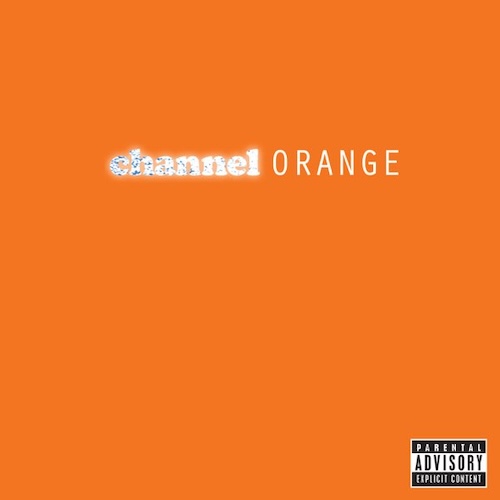
Soul and R&B, admittedly, are genres I've never been super tapped into. Although, in the early 2010's, my curiosity was piqued when Frank Ocean started to emerge on the scene. For one, having worked at a record store around this time, I fielded questions about Ocean's breakout mixtape nostalgia, ULTRA seemingly on a daily basis. I was also intrigued by his affiliation with Odd Future, specifically how his more measured, 'voice of reason' persona entertained company with the rest of the boisterously crass collective. What solidified it for me was the open letter that coincided with the release of his commercial debut channel ORANGE. To avoid the wave of discourse and speculation that surely would arise from the glaring themes of same-sex unrequited love that were present on the album, Ocean revealed that his first true love was for another man. As someone who struggled with their sexuality, this was the final push that compelled me to see what the hype was all about. Despite not being in my wheelhouse, I learned fairly quickly that Ocean is one of those special artists who could be considered fairly universal.
Revisiting channel ORANGE all these years later, I think I now understand exactly what made his music stand out to me. For a soul and R&B artist, his taste in production is surprisingly minimal. Tracks like Thinking Bout You, Sierra Leone, and Pilot Jones feature very distant, often warped atmospheres propelled by dull percussion. Even when the instrumentation is more direct, it is still quite minimal. Super Rich Kids is very meditative with kicks, snares, and staccato piano chords all hitting on this very rigid half-note grid, Bad Religion is mostly comprised of a single church organ, and at its most maximal, Sweet Life is constructed by a trio of understated drums, bass, and electric keys. This album, and to a greater degree Blonde, really flipped my expectation of what soul and R&B sounded like; trading lush, maximally produced, and expertly performed instrumentation for something more intimate, yet also somewhat mysterious.
This minimalist restraint, however, shouldn't be mistaken for a lack of ambition; working with fewer elements than a typical R&B arrangement works entirely in Ocean's favor. By clearing away the sonic clutter, he forces the spotlight onto subtle, beautiful instrumental flourishes that might have otherwise been buried. These brief textures end up greatly enhancing the vivid settings of his stories. Take Sierra Leone, which suddenly blossoms with lush strings, delicate tuned percussion, and heavenly backing vocals at the exact moment his lyrics navigate a fictional transition into young fatherhood. Similarly, the reversed sonic swells and turbulent, streaming guitars on Pilot Jones create a weightless sensation that perfectly mirrors the euphoric imagery Ocean uses to describe an intoxicating relationship. On Crack Rock, squawking organs over a boom-bap beat mirror the grimy tale of how addiction erodes a man's family, home, and baseline humanity.
Ocean's voice feels equally as intentional as the instrumentation; showcasing that he can also carry the emotional weight of a track. While some might consider his performances on the more intimate moments, Thinking Bout You and Bad Religion specifically, to be shaky and somewhat amateurish, I think they sound very authentic in the moment. Lyrically, they both see Ocean navigating one-sided relationships through conversational deliveries and wavering falsetto that adequately translate his lovesick emotions. On the more lavish and hedonistic cuts, Ocean showcases a little more vocal prowess. On Super Rich Kids, an otherwise stiff and rigid track that mirrors the stagnant, unfulfilled potential of its privileged protagonist, Ocean transforms the song into a genuinely lively, animated display during the last verse. He also showcases his soulful side on Sweet Life, a track that rhetorically asks why one would want to leave the lap of luxury to experience the 'real world'. The choruses in particular feature some of Ocean's most passionate vocals on the record, but the song reaches a satisfying climax when he comes out of a jazzy breakdown with a captivating wail.
While the first half of channel ORANGE is nearly flawless, the back half is unfortunately where the record begins to slip slightly for me. This dip in momentum starts with the album's ambitious centerpiece, Pyramids. Sonically, I really appreciate the change of pace; it steers the album into an expensive, electro-pop direction, and when the beat drops to usher in the song's slower second phase, the gliding synthesizers create an undeniably iconic moment. Vocally, however, Ocean approaches the track with a loose, freestyled nature that ultimately comes across as underwritten. Unlike Super Rich Kids, Pyramids actually feels like a case of untapped potential.
After this lull, the record struggles to build back up. Both Lost and Monks feature decent production on paper, but I find myself failing to connect with them on either a lyrical or vocal level. The real low point of the sequence for me, however, is Pink Matter. Despite its shorter runtime, it somehow tends to drag longer than Pyramids, slowing the album's pace down to a dull snooze. The lyrics fail to leave much of an impression, the guitar solo falls completely flat, and the track's only saving grace is a characteristically one-of-a-kind guest verse from André 3000. These three tracks could have been left on the cutting room floor and I think the album would have been much tighter for it.
Even with a comparatively lacklustre back half, I won't deny that this was an important musical statement. Along with artists like The Weeknd and FKA Twigs, who emerged around the same time, Ocean helped usher in a moodier alternative to soul and R&B. On top of that, he showed bravery; writing about same-sex relationships with the understanding that audiences are likely to look into it beyond his poetic license. Then he doubled down, deciding to control his narrative by coming out publicly. Regardless of how much I enjoy the music, it's stories like these that had a profound effect on my life, and no doubt helped me walk down a path towards my own self-acceptance.